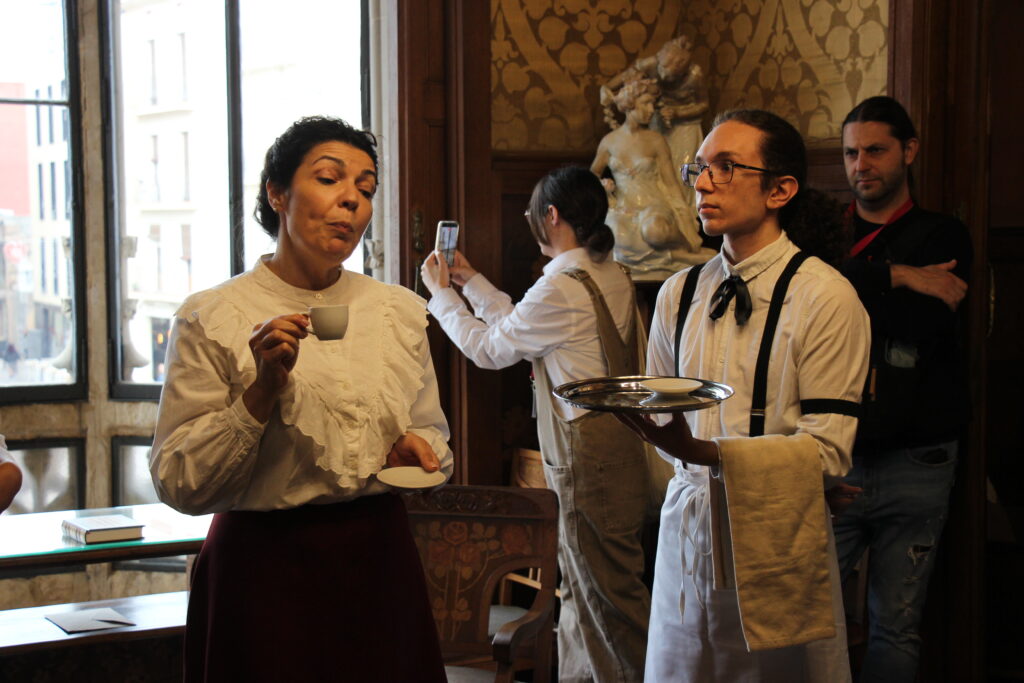
When we think of Modernism, we often picture grand buildings, colourful stained-glass windows and architecture filled with decorative details. However, modernist fashion was also one of the most representative expressions of this artistic and cultural movement. During the late nineteenth and early twentieth centuries, clothing reflected the changes of a society moving towards modernity while still valuing elegance and attention to detail.
Moreover, clothing became a way of expressing both personal identity and social status. Fabrics, accessories and tailoring helped communicate a person’s position in society, tastes and lifestyle during a period marked by cultural and economic transformation.
Women’s fashion during the Modernist era
Women played a central role in the aesthetics of the Modernist movement. Their garments were known for elegant lines, flowing shapes and a remarkable attention to decorative details.
Long, voluminous skirts were one of the defining features of the period, while bodices were fitted closely to the waist with the help of corsets. In addition, luxurious fabrics such as silk, velvet and lace added sophistication to outfits that were often inspired by natural elements, including flowers, leaves and organic forms.
Furthermore, accessories were just as important as the garments themselves. Decorative hats, gloves, parasols, fans and jewellery completed ensembles designed to convey refinement and distinction.
Men’s clothing at the beginning of the twentieth century
On the other hand, men’s fashion also followed well-established rules. Men commonly wore three-piece suits consisting of trousers, a waistcoat and a jacket, usually made from high-quality fabrics in dark colours.
Hats were considered an essential part of everyday attire. Likewise, pocket watches, ties and walking sticks were common accessories. As a result, men’s clothing projected elegance, seriousness and respectability.
Although men’s fashion evolved more slowly than women’s fashion, it nevertheless reflected the social and cultural changes that accompanied the arrival of the twentieth century.
Fabrics, tailoring and craftsmanship
One of the most interesting aspects of modernist fashion was the process of creating garments. In fact, most pieces were made by hand, using carefully designed patterns and paying close attention to every detail.
Dressmakers and tailors played a crucial role in producing unique garments tailored to each individual. Moreover, the quality of the materials and the craftsmanship involved transformed many pieces into genuine works of art.
Discovering history through fashion
Fashion is an extraordinary tool for understanding history. Through clothing, we can learn about social customs, shared values and the image people wanted to project during a particular period.
For this reason, initiatives such as the Modernist Clothing Workshop at Casa Navàs offer a practical and creative way to explore heritage. Learning about fabrics, patterns and tailoring techniques is also a way of travelling back in time and discovering everyday life during the Modernist era.
Finally, at Casa Navàs, Modernism can be experienced beyond architecture. It can also be discovered through traditions, culture and the way people understood elegance. Therefore, modernist fashion remains one of the most fascinating ways to connect with a period that continues to inspire admiration more than a century later.